
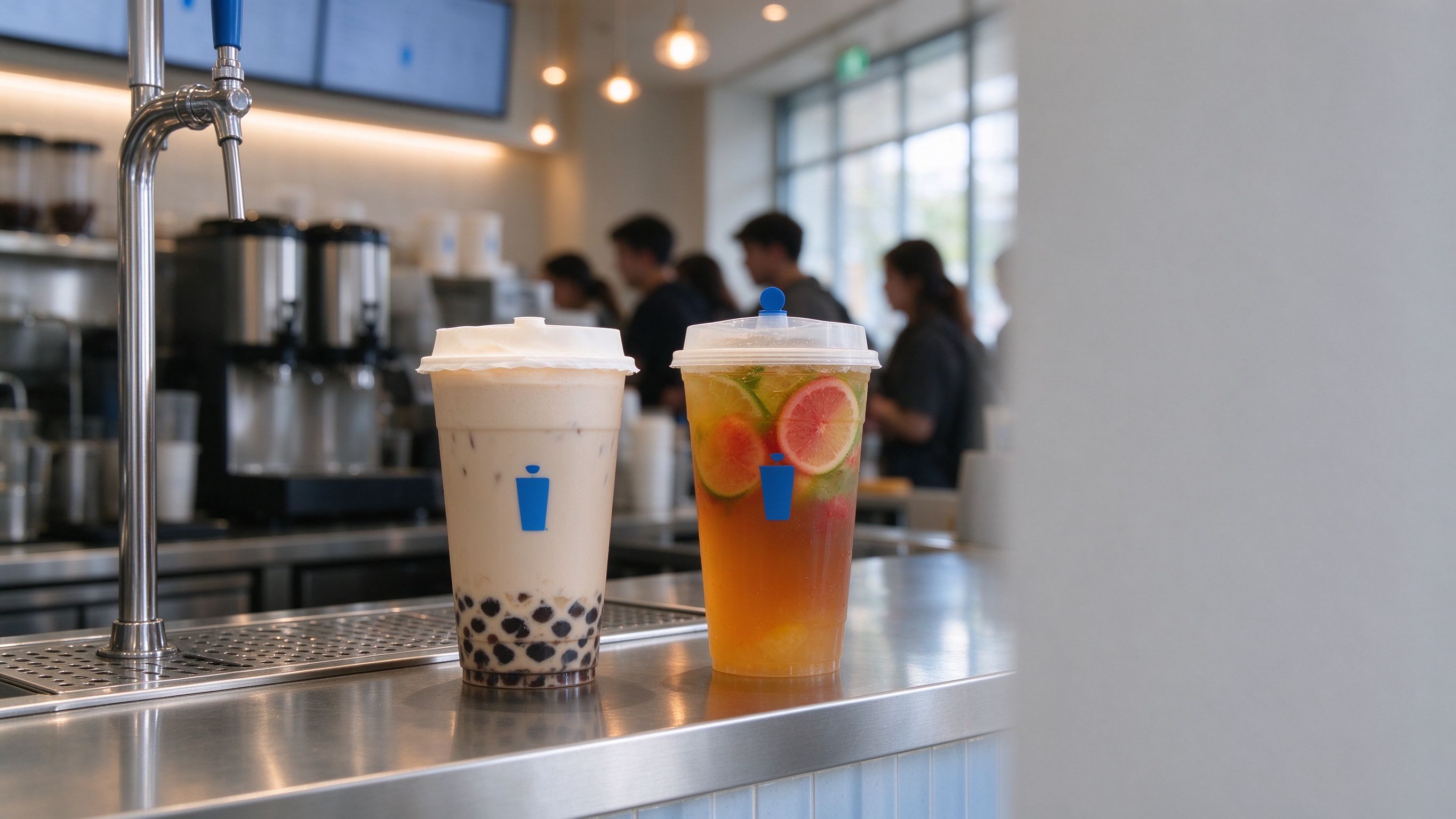
In the first half of 2026 several Chinese tea brands accelerated overseas at the same time: the largest passed 4,000 stores abroad, a mid-tier brand almost doubled its overseas count in a year, and another grew from around twenty stores to more than seventy across thirteen countries. A three-hour opening queue in Bangkok is no longer news.
Three things behind the boom
The supply chain works. Tea, syrups, lids and sealing film ship by the container, so overseas stores no longer hunt for local suppliers — and consistency improves.
The franchise model matured. Head office supplies site criteria, SOPs and training, cutting the time from signing to opening to a few months. Ordinary operators can now open a store.
Localisation got finer. Sugar levels, ice, toppings and menu language are rebuilt for local habits instead of translating a Chinese menu word for word.
What it means for independent shops
- Competition moved from "who tastes better" to "who serves faster" — one jammed machine at peak hour loses a dozen orders.
- Membership, stored value and stamp cards are turning from nice-to-have into table stakes.
- With mostly local staff, interface and training language decides how fast people get productive.
The conclusion is blunt: décor and recipes get copied. Speed at the counter, clean books and fast staff onboarding do not — and those are decided by the POS.