
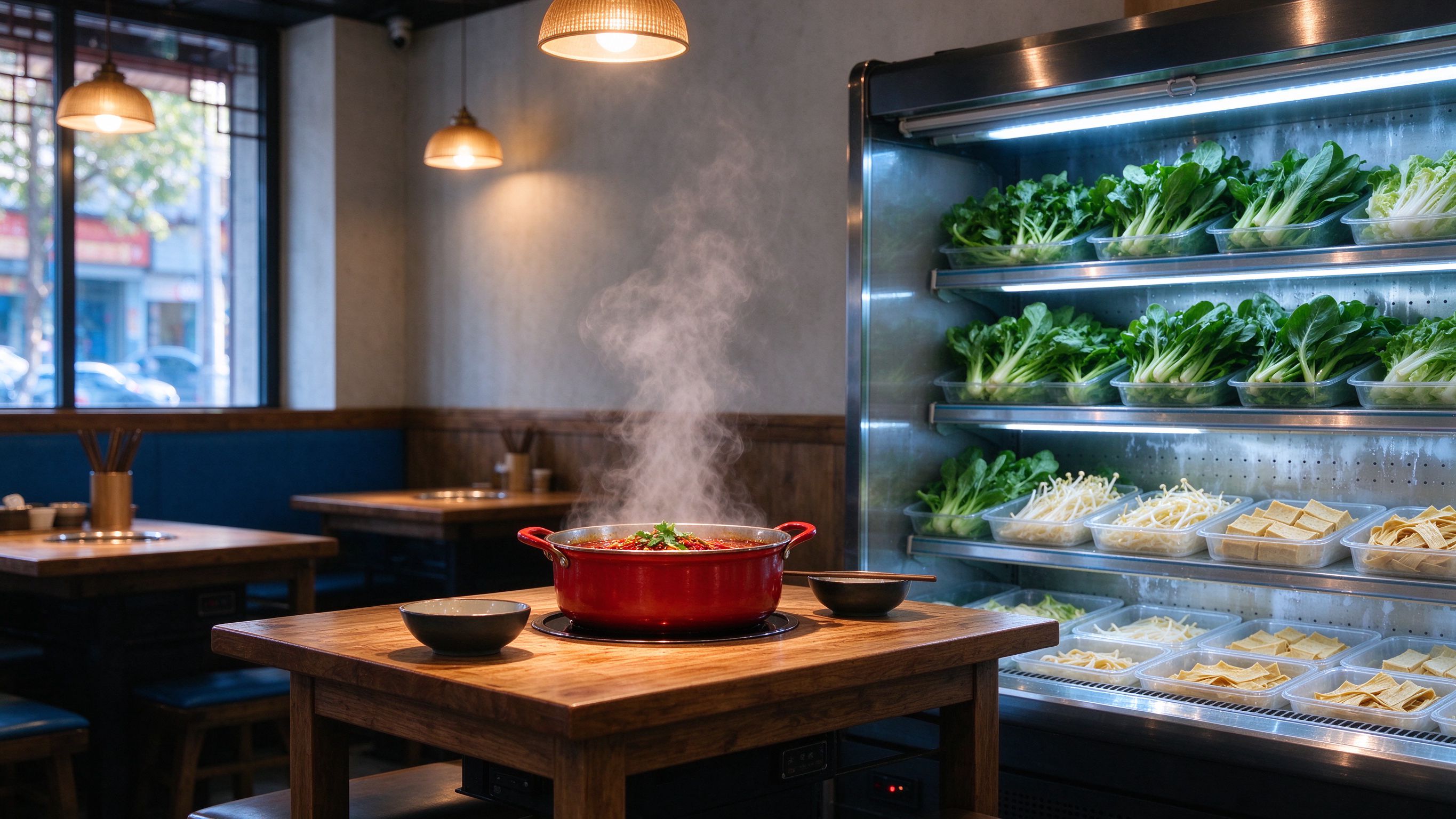
Local commercial data in Japan counted 273 new malatang specialty shops opened in the first half of 2026 — more than the whole of the previous year. Leading brands now operate in more than twenty countries at the 200-store scale, with overseas average tickets clearly above the domestic level.
Why this category broke out
Low skill floor, high tolerance. No head chef is needed: one base broth plus standardised ingredients keeps output consistent, so the hardest overseas problem — skilled labour — is sidestepped.
Pick-your-own and photogenic. Customers choose their own ingredients, which creates participation and a visual result that travels well on social platforms.
Room to localise. Heat level, broth and side dishes can be adjusted to local taste without rebuilding the whole model.
The three details that decide profit
- Weighing. Price-by-weight has to talk directly to the POS; copying a weight onto the till by hand is the most common source of wrong totals.
- Add-ons. Sesame paste, drinks, staples, packaging fees — every extra paid item is another chance to miss a charge, so the menu must be structured inside the POS.
- Service speed. Forty extra seconds per order at peak pushes the queue out the door and lifts walk-outs immediately.
Two and a half of those three are a POS-and-scale problem, not a cooking problem.