
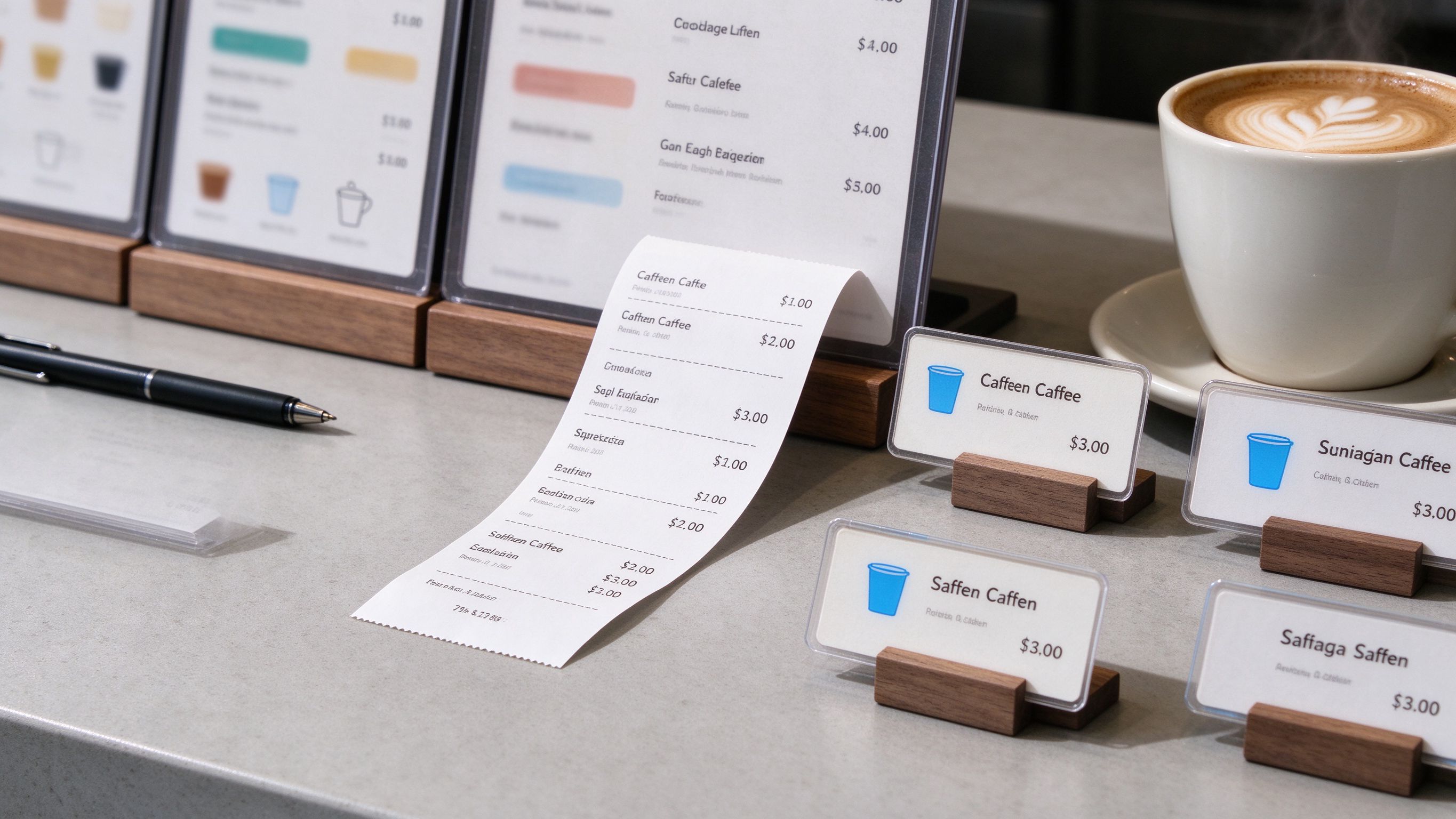
Most owners start by wanting everything translated, then end up with a messier menu and three price lists to update. The cheaper approach is to split it into three layers.
Layer one: what staff read
POS screens, kitchen display, stock actions, error messages. The goal is that staff work without a manual. The rule is per staff member, not one language for the whole store.
Layer two: what customers read
Menu boards, ordering pages, receipts. These should coexist: local language first, Chinese or English below. Receipt language normally follows the language chosen at ordering.
Layer three: what the owner reads
Reports, stock alerts, commission. One or two languages is enough, but the owner must genuinely read them.
Three ways to save money
- Dish names as local name plus one line of description, never literal translation.
- Standardise modifiers (less ice, mild, extra topping) into a glossary translated once and reused.
- Shelf labels carry numbers and units only; language lives on the shelf talker.
Keep translation to a glossary plus fixed descriptions, and adding a dish later is just adding a term.